A proposal here is a room, not an attachment. You see who entered, their role, what they opened and how long they dwelled. The mutual action plan tells both sides what happens next.
In the demo room, the CFO replayed the ROI model at 10:47pm and procurement opened the case study. That is not analytics trivia; it is who to call, about what, tomorrow morning.
proposals.cedxsystems.com, live build
Runs on demo data. The Helix Proposal Studio in the chrome is the demo workspace, not a customer.
320 proposals · $27.1M open167 open, from draft to engaged
92.5% open ratesent to opened; 74.8% opened to engaged
24.2 days to decisionagainst a 21-day SLA, priced at $17.1M
What it is
Three things a room tells you that a PDF cannot.
Buyer-side activity, by role
The deal room's activity feed names the role behind every event: procurement opened the case study, the IT director downloaded the PDF, the CFO replayed the ROI model, the VP of operations opened pricing, and someone shared the room with a colleague. Multi-threading stops being a guess.
74 opens · 96.7 minutes of dwell in the demo room
Events stamped with role and time
Shares and replays counted, not just opens
proposals screen-2
A mutual action plan both sides sign up to
Seven steps with owners and due dates: security questionnaire, ROI review, reference call, legal redlines, pricing tier, sponsor sign-off, e-sign packet. Buyer-owned steps are labelled Buyer; the one overdue step feeds the stall score automatically.
0/7 to 7/7 progress on the room card
Buyer and seller sides labelled per step
1 overdue MAP item → stall risk, on screen
proposals screen-2
Templates ranked by what they win
Twelve packs with uses, wins, win rate and average value: a pilot pack at 40.9% across 43 uses, a partner co-sell pack at 71.4% across 11, a strategic suite at 21.7% across 48. Which template ships is an evidence decision, not a habit.
Not a mockup and not a concept deck. This is what opens at /app/proposals.
proposals.cedxsystems.com
01 Pulse
The bid desk, with staleness priced
$27.1M open across 167 open proposals. The alerts are specific: 117 documents past the 21-day decision SLA worth $19.8M, 19 never opened at all worth $2.29M, and two terms blocks converting at 27.4% and 11.1% where the library average holds.
Engaged 32 · in review 18 · opened 32 · draft 27 · ready 22 · sent 36
19 proposals never opened, $2.29M
Terms blocks under-convert, named by code
02 Deal room
The room the buyer actually visits
Room value $409K, engagement 99, status Engaged. The chat runs buyer to seller in the room (a pricing-tier question answered in 3 minutes) and the decision clock ties the overdue MAP item to the stall board.
Live rooms listed with values up to $481K
Room chat with reply-in-room, on screen
Content blocks with opens and dwell each
03 Sections
A block library measured by dwell
2,310 sections across 12 library types, 1,684 of them buyer-opened, averaging 2.8 minutes of dwell. Sort by dwell and the services rate card at 9.1 minutes sits above everything. Pricing holds attention; that is the point of measuring it.
Pricing, ROI model, case study, solution, terms chips
Views and dwell minutes per section
Library codes on every block, CSV export
04 Templates
Ship the pack that wins, not the pack that exists
Uses, wins, win rate and average value per template, with status: active, draft, archived. A draft module-expansion pack at 16.7% stays draft until its sample says otherwise.
12 templates · 378 uses
Average win rate 35.5% across filtered packs
Avg value per pack from $40K to $270K
Who runs it
Three roles work the room.
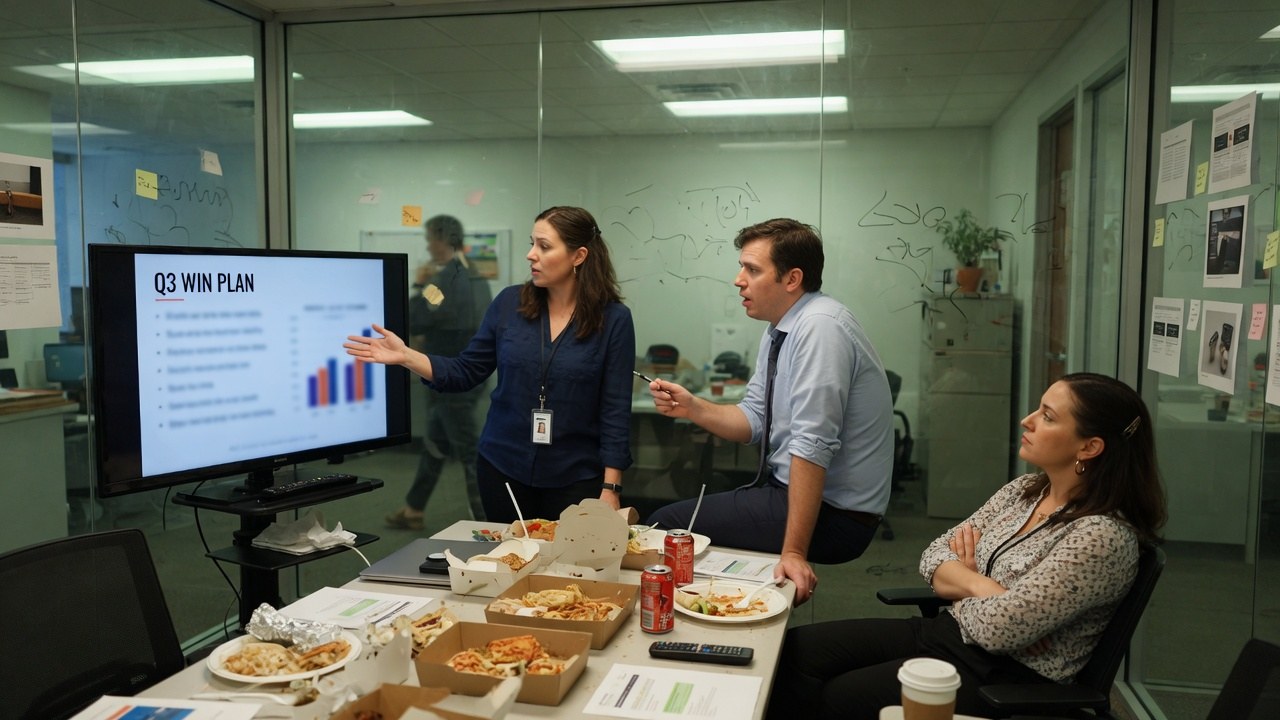
Roles, not references. We have no named customers yet, so nobody in these photographs is quoted, credited or claimed as one.
Account executive
Reads the activity feed before every touch. The CFO replaying the ROI model at night is tomorrow's first call, and the room already wrote the agenda.
engagement · 99
Bid desk
Owns the library: 2,310 sections, 12 templates, and the dwell numbers that say which blocks earn their place in the pack.
dwell · 2.8m
Sales leadership
Watches days-to-decision against the 21-day SLA. The $19.8M of stale open value is a coaching list, not a surprise at quarter end.
stale · $19.8M
The shape of it
What the demo workspace actually looks like.
Every figure below is legible in the captures above. Nothing here is a projection of your estate. It is the state of the demo data.
$27.1Mopen proposal value167 open of 320
92.5%open ratesent to opened
25.5%win rateaccepted over decided
117past decision SLA$19.8M stale open
Open proposals by status167 open of 320 in the demo book
Sent36
Engaged32
Opened32
Draft27
Ready22
In review18
Sent proposals the buyer opened92.5% open rate across the demo book
Opened · 92.5%
Never opened · 19 proposals, $2.29M
Inside the decision SLA117 of 284 decided+open past 21 days
41%
Past SLA · 117, $19.8M
Within SLA
How it runs
A proposal's life, in the order it actually happens.
01
Assemble from evidence
Start from the template whose win rate earns it, then pull blocks by dwell: the rate card and the ROI model lead for a reason.
02
Agree the plan
The mutual action plan assigns buyer and seller steps with dates. An overdue buyer step is a stall signal with a name on it, not a vague chill.
03
Read the room
Role-stamped events and block dwell say who is engaged and on what. The chat answers pricing questions inside the room, in minutes.
04
Decide on the clock
The decision clock runs against the 21-day SLA; past it, the proposal joins the stale list with its dollar value attached.
One record
The room hangs off the deal the estate already keeps.
A proposal is the buyer-facing surface of the same record the rest of the estate works from.
Finding this out on the third call is worse for you than reading it here, and worse for us.
Proposals is not generally available. What opens today is the live build running on demo data: the Helix Proposal Studio in the chrome is the demo workspace, not a customer.
We have no named customers to show you, so this page shows none. The buyers, roles and accounts in the captures are demo data, not references.
Engagement analytics show what happens inside the room: opens, dwell, replays, shares. They do not see the buyer's internal meetings, and we do not pretend otherwise.
Template win rates in the captures come from 378 demo uses. Small samples (an 11-use pack at 71.4%) are visible as small samples on the screen, and should be read that way.
No audit or compliance certification has been issued. What we can evidence about hosting, encryption and access is on the security page.
Yes. Every screenshot is a capture of the running build at /app/proposals, on demo data. The demo workspace is named in the chrome.
What does the buyer see?
A digital sales room: the content blocks, the mutual action plan with their steps marked Buyer, and a chat that reaches the seller directly. The buyer-view label is on the demo capture itself.
What exactly do you track?
Events inside the room: entry, opens per block, dwell time, downloads, replays, shares and chat. The demo feed shows each with role and timestamp: procurement opened the case study, the CFO replayed the ROI model.
How does the stall score work?
Overdue mutual-action-plan items feed it automatically. The room card shows 0/7 progress with one overdue step, and the decision clock ties that to the stall board. Silence has a mechanism now, not just a feeling.
Is Proposals audited or certified?
No certification has been issued. What we can evidence about hosting, encryption, tenant isolation and production access is written up on the security page.
The rooms are running. Go and look at one.
Live build, demo data, no card. Then ask what your last proposal's open rate was, and who knew.