





CEDX SystemsCEDX SYSTEMS

Partner program

Build, sell, and implement the CEDX estate.

Four paths, three tiers, deal registration, and enablement on products you can open live from every page.

Apply to the programFind implementation helpChannel PRM product lives at /partners/
4partner paths
3tiers with written benefits
132products to sell or implement
2business days to application response
132 products1 loginLive software on every product page

Paths

How partners work with us

Pick the motion that matches your practice. Depth pages cover scope, economics shape, enablement and fit.

Why CEDX

An estate partners can actually sell

  • 132 products, one login - less glue work for you and the customer
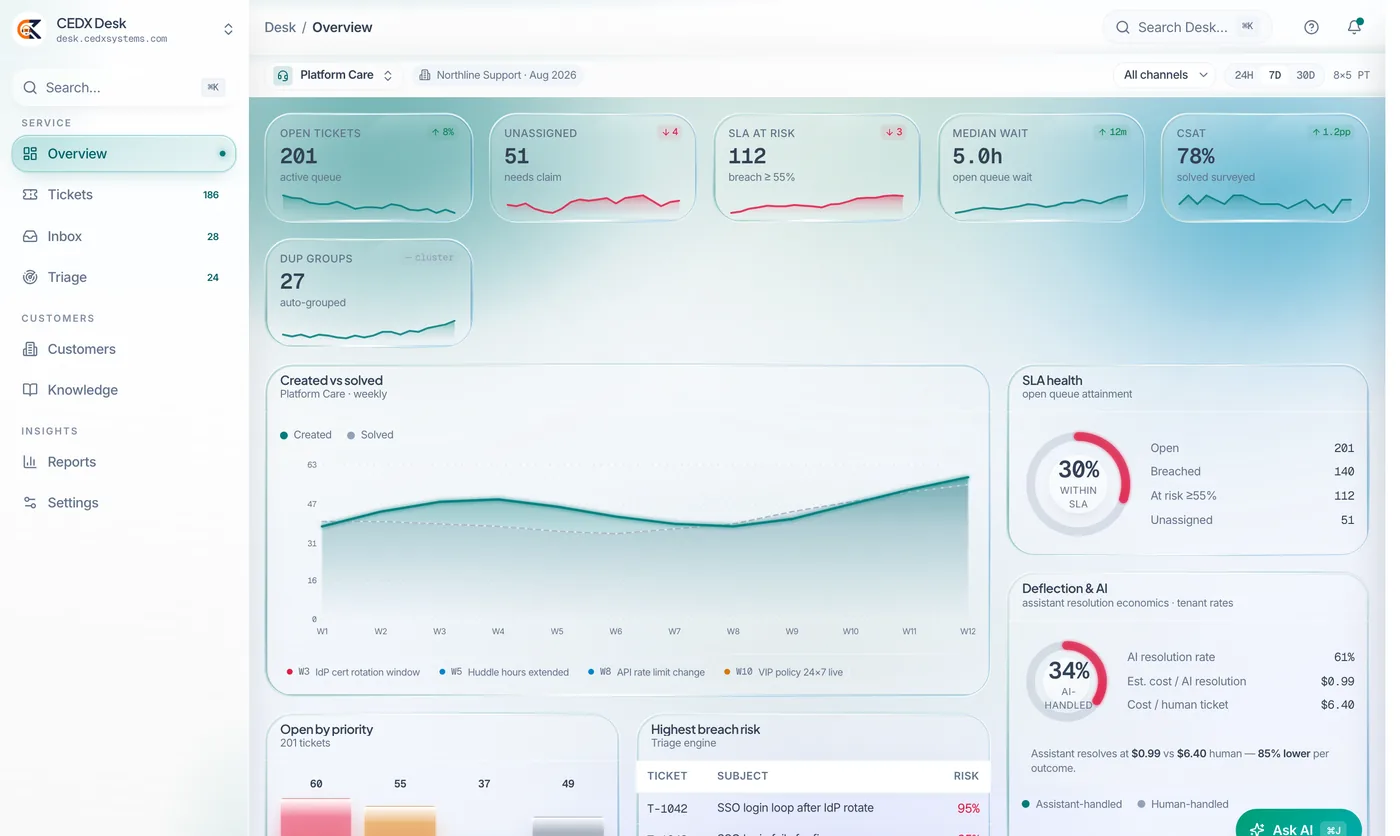
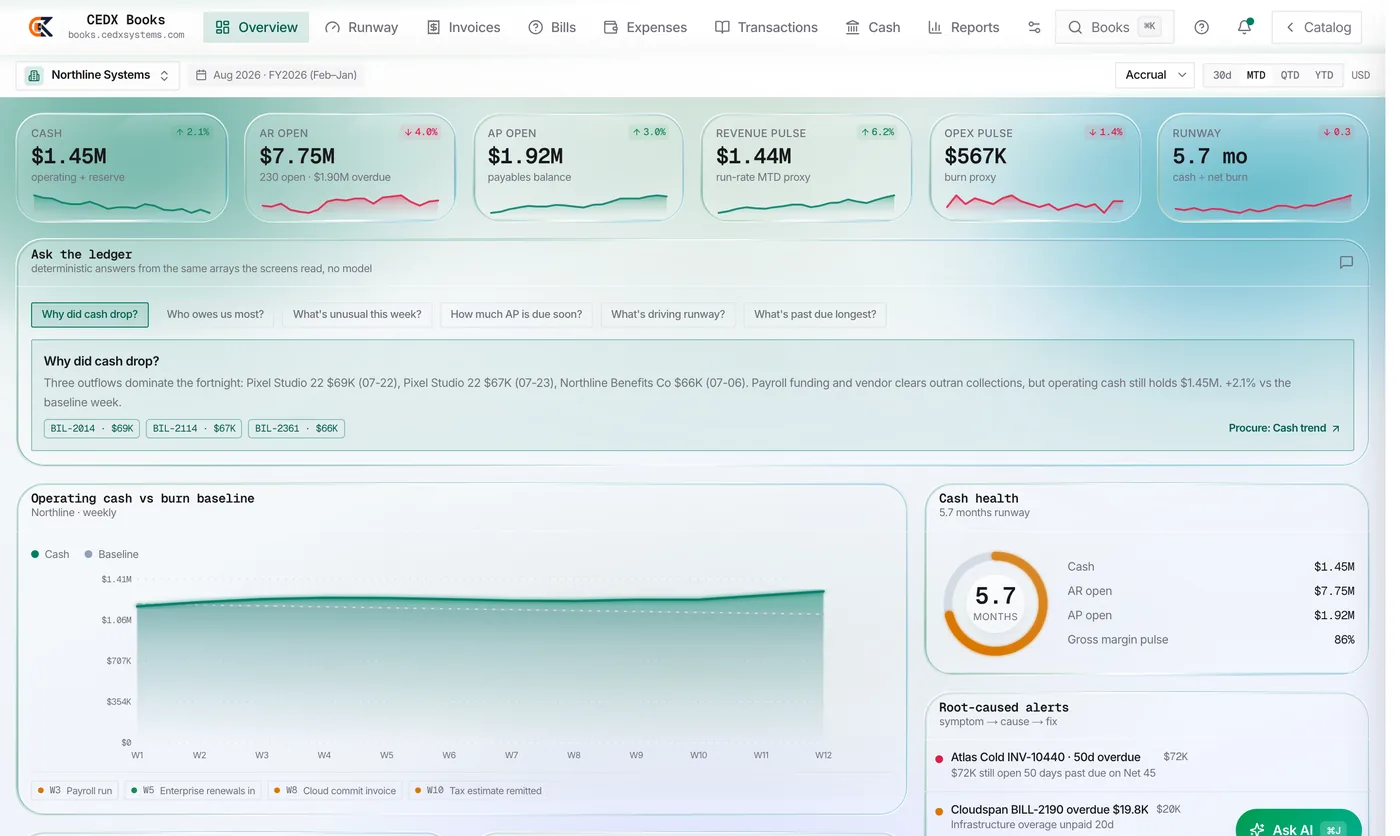
  • Live software demos on every product page - no fake screenshots
  • Deal registration and co-sell on qualified opportunities
  • Partner tiers with written benefits - not vanity badges
  • Optional channel software: CEDX Partners PRM
  • SE and enablement tracks for Advanced and Premier

Program shape

From application to first deal

Apply

Path, region, delivery proof. Partner desk reviews.

Onboard

Portal, branding rules, demo tenants, sales kit.

Enable

Product labs, battlecards, optional workshops.

Register & deliver

Deal reg, co-sell, implementation playbooks.

Channel

Co-sell with registration and SE time

Deal registration, protection windows, and SE time on multi-product estates where architecture matters.

Program charter

Why the CEDX partner program exists

CEDX ships as one operating estate with shared identity and a shared customer graph across revenue, service, finance, commerce, people, and platform products. Most customers do not configure that estate alone on day one, and they should not have to invent delivery methodology while learning a new queue design. Partners exist so implementation quality, training, hypercare, and multi-product architecture remain professional after procurement signs.

The program is written for finance and delivery leads, not only for partner marketing teams collecting badges. Paths, tiers, deal registration rules, co-sell definitions, and enablement ladders are published so both sides know what the partnership purchased. Vanity badges without evidence are not a tier, and annual review can step benefits down with notice after remediation fails.

Consulting firms implement and run managed services on single-motion pilots and multi-quarter estate programs. Resellers sell with registration, demo tenants, and certified motions that match the live product pages. System integrators own identity, multi-product architecture, entitlements, and Builder or API extensions that must not invent a second login.

Distributors scale regional coverage with train-the-trainer enablement and reseller recruitment playbooks that keep quality local. Marketplace ISVs extend the estate under identity and data contracts after security review. The PRM product at /partners/ is software for managing your own channel; the program at /partner-program/ is how you sell and implement CEDX — keep those URLs separate.

Co-sell model

How joint pursuits actually run

Register opportunities in the portal with products in scope, stage, and close date so conflict detection has something real to evaluate. CEDX confirms or flags conflict within the published SLA rather than leaving registrations in limbo. Multi-product estates get joint discovery; complex architecture gets SE time; cold logo drops without footprint do not get co-sell theatre.

Protection windows widen with tier so Advanced and Premier investments in pipeline are not free-ridden by last-minute registrations. Spam registrations and stale pipeline rows are cleaned because dirty portals poison forecasting for everyone. Portal hygiene is part of Advanced and Premier annual review, not an optional courtesy.

Customers always choose CEDX-led, partner-led, or hybrid delivery after an intro shortlist of two to three firms. Forced placement is not the model because forced matches become failed implementations. When no partner fits region, product, or compliance constraints, we say so and discuss CEDX-led or hybrid options where available.

Multi-product deals are where co-sell pays for itself: CRM with Desk, Books with Revenue, Field with inventory and voice on one job record. Single-SKU transactional resale still uses deal registration without automatic Premier SE hours. First-year patterns for serious firms usually look like onboard and demo-ready motion in Q1, first registered or delivered opportunity in Q2, second product family or region in Q3, and tier review with outcomes in Q4.

Enablement ladder

Same live build as the website

Every product page embeds running software so demos and implementations share one truth with marketing. Battlecards link to live motions instead of outdated screenshot packs that age out between quarterly refreshes. Academy modules end in checklists and product opens; webinars cancel if the app will not open.

Registered unlocks portal access, core kits, flagship demos, and self-serve Academy for work design basics. Advanced adds full estate sandbox, live workshops, enhanced margin, and featured directory placement after quality review. Premier adds named SE hours, priority co-sell pipeline reviews, early roadmap notes, and a joint business plan reviewed annually.

The core benefits matrix is shared across consulting, reseller, SI, and distributor paths so finance can compare apples to apples. Path-specific SPIFs, architecture labs, and train-the-trainer packs sit on top without rewriting the matrix every quarter. Margin schedules are published so partnership models survive internal CFO review without a fog layer of verbal promises.

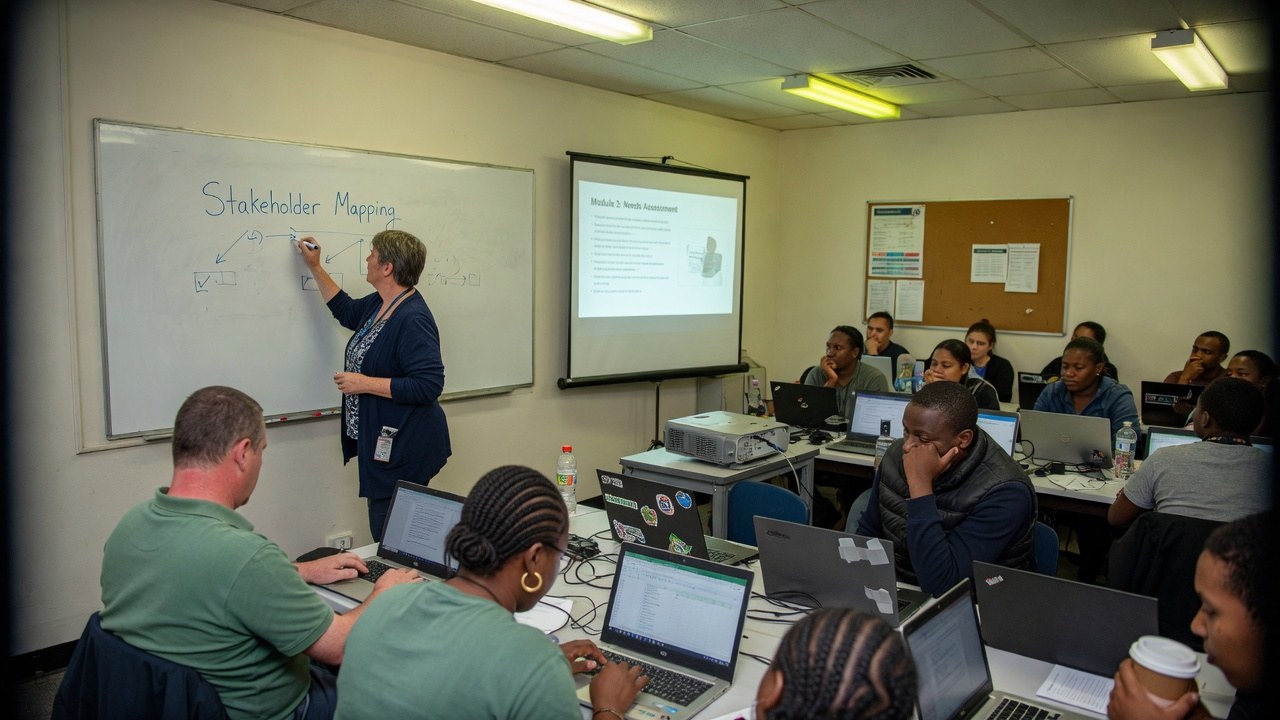
Public Academy stays free so evaluation is not gated behind certification theatre that blocks operators from learning the work. Partner labs after approval are certification-shaped practice in demo tenants with practitioners who will deliver. Sales kits, implementation playbooks, security packs, and co-brand guidelines track live product builds rather than a parallel marketing universe.

Governance

Evidence over volume at review

Progression uses delivery proof, practitioner activity in product, portal hygiene, and customer outcome notes rather than raw registration counts alone. Volume without quality does not purchase Premier, and Premier without a joint business plan does not renew on autopilot. Quality review can remove inactive directory listings so customers are not introduced to ghosts.

Branding non-compliance blocks marketing assets until fixed because inconsistent marks erode trust in co-branded pursuits. Deal registration disputes follow written rules with examples in the portal guide so partner managers are not inventing policy mid-quarter. Security packs and shared-responsibility notes exist for procurement questionnaires; do not invent architecture answers in RFPs.

If annual review fails, benefits step down with notice and a remediation plan before removal whenever recovery is realistic. The goal is a healthy channel of firms that deliver, not a vanity headcount of logos on a slide. Before you apply, read a path page, the tiers matrix, and one customer scenario in your industry, then submit a two-minute application with motion and region truth you can staff.

Partner success exists to unblock enablement and co-sell operations, not to write your SOWs or staff your bench. Bring practitioners to Summit and labs; badge-only attendance wastes seats operators need. Questions that are truly product defects still route through Support with estate context; do not open duplicate threads across every channel.

Commercial packaging

What customers actually buy through partners

Customers rarely buy 'the estate' as a single SKU on day one. They buy a motion: revenue operations that forecast from live stages, service operations that keep jobs and tickets on one record, finance operations that close without three exports, or commerce operations that stop promising stock that does not exist. Partners package those motions as Foundation, Expansion, and Estate programs with written success metrics, retire lists, and hypercare exit criteria so procurement is not buying a vague transformation slogan.

Foundation scopes land one product family with data cutover, role-based training on the live apps, and weekly metric reviews until the Friday number is trusted. Expansion scopes add a second family on the same identity plane — CRM plus Desk, Books plus Revenue, Field plus inventory — without inventing a second customer graph.

Estate programs run multi-quarter architecture: identity lifecycle, entitlements, multi-entity structure, integration on the estate bus, and operating model for who owns config after hypercare. These programs are where Premier co-sell and SE time concentrate because architecture risk is real and the commercial value is multi-product.

Managed services retainers keep configuration healthy when the customer does not want a permanent internal admin bench for every product surface. Define RACI in the SOW so Support tickets route correctly and partners are not surprised by platform-only escalations that should have been delivery work.

Price books, rate cards, and SOW templates remain the partner's commercial paper; CEDX provides non-binding samples and playbooks, not a mandate to underprice delivery. Margin and incentives follow the published tier table so finance can model partnership economics without verbal side deals.

Security and procurement

How partners survive enterprise review

Enterprise buyers ask about identity, access reviews, audit exports, data processing, and shared responsibility before they care about your demo polish. Use the partner security pack for architecture overviews and questionnaire shortcuts; escalate gaps to partner success instead of inventing answers that create liability.

SSO, lifecycle provisioning patterns, and entitlement models should be discussed in the estate map, not buried in an appendix nobody reads until week six of implementation. Partners who lead with security fluency win regulated and multi-entity deals that pure product demos lose.

Illustrative scenarios on the website are honest about being composites; do not present them as audited case studies in an RFP response. When a named public case is approved, it will be labeled as such — until then, use scenarios as evaluation narratives with live product proof.

Data migration plans need an authoritative customer graph owner, a retire list, and a freeze window; partners who skip this create double-write disasters that look like product bugs in Support. Write migration scope into the SOW with acceptance tests operators can run without a consultant standing over their shoulder.

Procurement comparison matrices miss seams. Teach buyers to open three apps on one user and follow one customer record; that test separates estate platforms from glue stacks faster than a hundred feature rows. Bring that test into every serious pursuit, including co-sell reviews with CEDX.

Geographic and industry coverage

Depth over brochure maps

Region truth is coverage you can staff with practitioners, not a list of countries on a capability slide. Distributors exist to densify local coverage when a single SI cannot be everywhere; they do not exist to rubber-stamp inactive resellers into the directory.

Industry focus speeds time-to-value: retail and wholesale motions differ from cold-chain field service, which differs from multi-entity subscription finance. Partners should pick two verticals they can defend with reference-shaped work rather than claiming every industry on earth.

Language, on-site requirements, and compliance regimes belong in directory intro requests and in deal registration notes. Missing constraints waste SE time and produce shortlists that fail in the first customer call.

Roadshows and regional forums exist to put co-sell and enablement where partners already operate. Propose host cities when opportunity density justifies logistics; vanity events without pipeline waste everyone's calendar.

Global accounts with multi-region rollout need wave plans and a single identity strategy; do not sell six disconnected regional tenants as an estate. SIs who own multi-entity identity patterns are the right path for those pursuits.

Operating cadence with CEDX

What good partners do weekly

Keep portal pipeline stages honest; stale opportunities poison protection windows and destroy trust in co-sell forecasting. Register early enough that conflict detection is meaningful, not as a last-minute claim on a deal already verbally committed elsewhere.

Send practitioners to enablement; practice leads own methodology artifacts and tier evidence for annual review. Badge-only attendance at Summit without delivery people is a signal that the partnership is marketing-led, not delivery-led.

After each customer pilot, write outcome notes: what metric moved, what was retired, what broke, what you would change in the playbook. Those notes become progression evidence and improve the next Foundation package you sell.

Route product defects to Support with reproduction; route co-sell and enablement to partner success by tier; do not spray the same issue across five channels. Fragmented threads slow response and create contradictory guidance to customers.

Quarterly, review your joint plan if Premier, or your progression checklist if Advanced, against actual delivery quality — not only against registration volume. Volume without outcomes does not survive review and does not help customers.

Who joins

Four partner motions

Most firms pick one primary path and optionally a secondary.

Consulting firm

Delivers implementation and managed services on the estate.

Reseller / VAR

Sells with deal registration and demo tenants.

System integrator

Owns multi-product architecture, identity, and extensions.

Distributor

Enables regional resellers and local coverage.

Co-sell

How opportunities move

Register

Opportunity in portal with products, stage, and close date.

Confirm

CEDX confirms or flags conflict within published SLA.

Shape

Joint discovery on multi-product estates.

Pursue

Co-sell motions and SE time when architecture is complex.

Deliver

Partner implements; CEDX hypercare path as defined by tier.

Enablement ladder

What unlocks by tier

Registered

Portal, core kits, flagship demos, self-serve Academy.

Advanced

Full sandbox, workshops, enhanced margin, featured directory.

Premier

Named SE hours, priority co-sell, early roadmap notes, joint plan.

Full benefits table →

Economics

How value shows up

Project & advisory

Consulting paths bill implementation and retainers.

Margin & SPIFs

Reseller and distributor schedules by tier and quarter.

Marketplace IP

SIs can productize extensions after security review.

Trust

Partner security posture

Partners access demo tenants and customer estates under written rules.

Demo isolation

Partner demos use dedicated tenants - not customer production.

Customer access

Production access only under customer-approved engagements.

Brand & claims

Co-brand and public claims follow portal guidelines.

Global

Coverage model

Directory listings show path and region. Empty exclusivity is avoided - coverage quality wins.

Find a partner

Shortlist 2-3 firms by path and industry.
Open directory →

Become a partner

Apply Registered; progress on delivery proof.
Apply →

FAQ

Partner program questions

Is the Partners product the same as the program?

No. /partners/ is CEDX Partners — channel PRM software. /partner-program/ is how firms join to sell, implement, and distribute CEDX.

How long does approval take?

Most Registered applications receive a decision within two business days once the form is complete.

Do you require certifications?

Registered is application and review. Advanced and Premier unlock with delivery proof and enablement milestones.

Can we run more than one path?

Yes. Apply once and set primary plus secondary motions.

Start at Registered

Tell us your motion and region. Partner desk replies with next steps or clarifying questions.