 CEDX
CEDX





Product · Blog
One login, 132 products
Why the estate model beats best-of-breed glue at the seams.

Most stacks fail at the seams. CRM does not see finance. Desk does not see the order. Field does not see the SLA the customer was promised on the phone. Operators invent spreadsheets because the systems disagree about who the customer is and who is allowed to see them when audit week arrives.
Best-of-breed tools optimise their own screen. Nobody optimises the handoff. Integration projects become permanent jobs with permanent reconciliation exceptions. Forecast meetings become export contests. Month-end becomes a negotiation about which export is less wrong. Support becomes archaeology across three admin consoles that drifted out of sync when someone left.
CEDX ships as one operating estate: shared identity, shared customer graph, shared design language. One login is not a slogan. It is how permissions and data move without a nightly reconciliation job that nobody trusts on Friday when the board pack is due and the war room is already full.
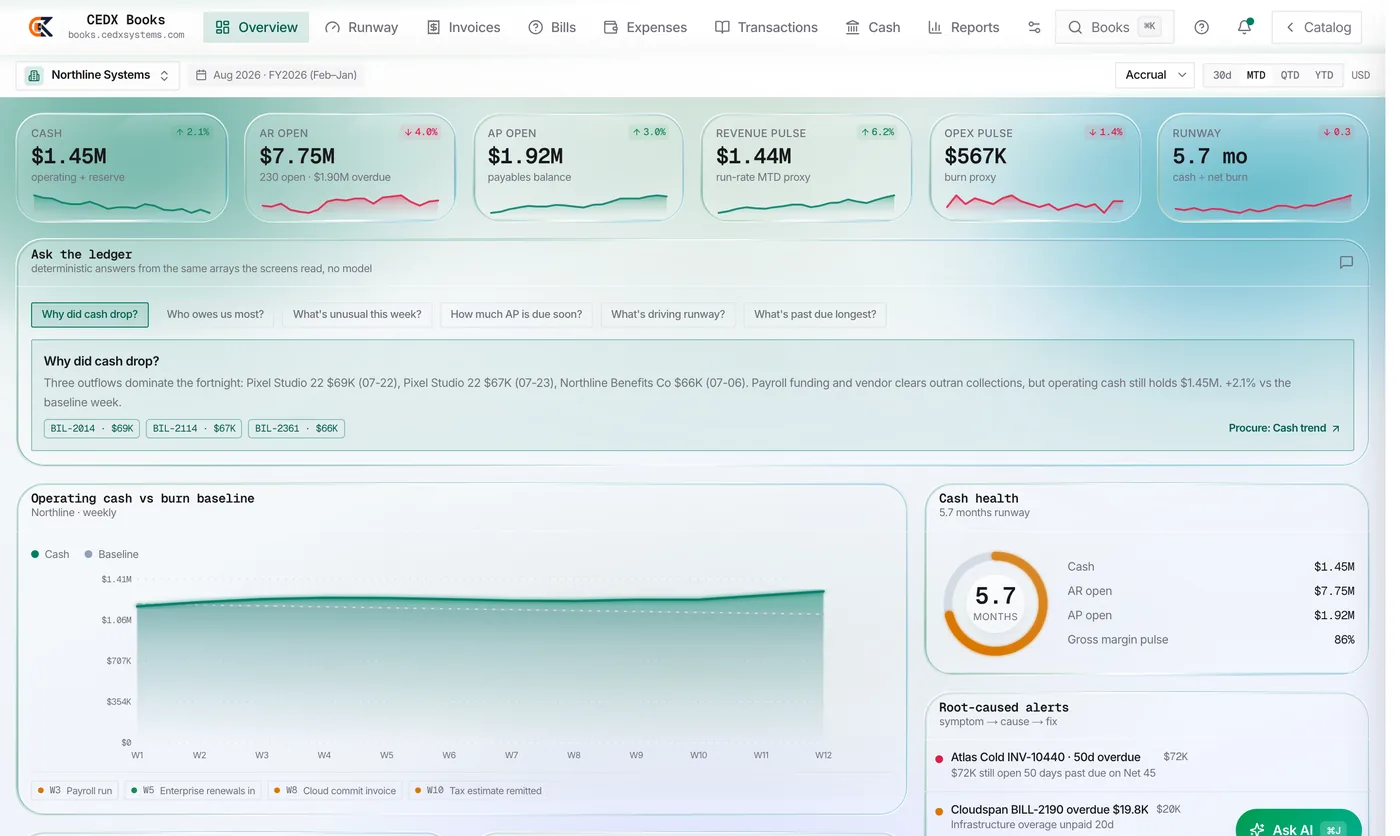
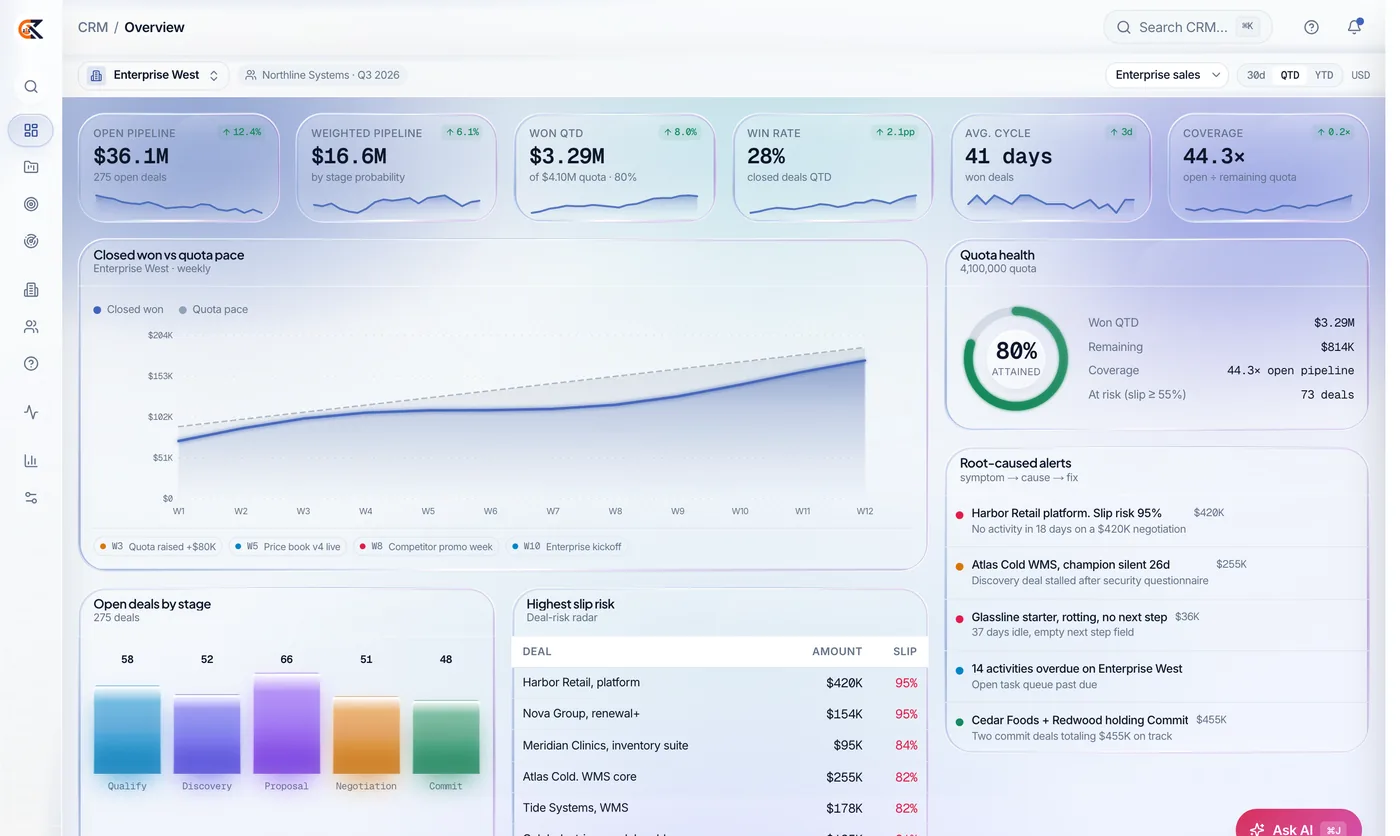
That is also why product pages show live software. If the demo is not the same build, we do not put it on the page. Marketing does not get a parallel universe of mockups. Partners do not implement a different product than the one the prospect clicked through from a webinar, an Academy module, or a partner battlecard.
When you evaluate CEDX, ask to open three apps on the same user and follow one customer record from deal to ticket to invoice. The seams are the product. If a vendor cannot show that path live, you are buying glue work and a second identity project you will fund every year with another analyst and another exception list.
Estate expansion is additive on purpose. Start with CRM or Desk or Books. Add the next product family without a second identity plane. That is how Harbor-shaped retail programs and Meridian-shaped finance programs stay coherent after wave two instead of becoming another integration diagram that only the SI understands.
Security and IT should ask the same question operators ask: who is the customer, and who is allowed to see them. Entitlements on one identity plane are easier to audit than six partial admin consoles that drifted out of sync last quarter when access reviews covered only two of the six tools.
Procurement often compares feature matrices. Feature matrices miss seams. A matrix can say both stacks have CRM and both have tickets. Only one stack has the ticket open with purchase history already on the record because the customer graph is shared. That difference is not a row in a spreadsheet until Friday fails in production.
Partners feel the same constraint in reverse. Demo tenants, battlecards, and implementation playbooks all point at the live build. Enablement does not teach a fictional product. Co-sell does not promise a roadmap slide that the website cannot open. That honesty is a commercial feature, not a documentation preference.
If your current architecture requires three IDs for one human and a reconciliation job to keep them aligned, the problem is not another point tool. The problem is the estate model. Start there before you buy another license that deepens the seam and hires another contractor to babysit exports nobody believes.
Same-day close, same-day store reconciliation, and field jobs that do not bounce are not separate product miracles. They are symptoms of one customer graph and operators who stay in the live system. Spreadsheets reappear when systems disagree. The estate is designed so the live number is the board number.
Bring an estate map conversation: products in scope, systems to retire, three pilot metrics, and owners. Open the catalog. Open a customer scenario in your industry. Then decide whether you want another year of glue or one login across the motions you actually run when customers are waiting.
Operators pay the tax for seams every week: re-keyed data, disputed forecasts, tickets without purchase history, close packs rebuilt by hand. Those are not minor inconveniences. They are the operating cost of a stack that optimized screens instead of handoffs.
Identity is the control plane. If the same human has three accounts with three entitlement models, access reviews become fiction and offboarding becomes a scavenger hunt. One login is how security and operators stop working against each other.
Data model honesty matters as much as SSO. A shared login into divergent customer records is still a seam. The estate insists on one customer graph so the ticket, the invoice, and the deal refer to the same entity without a reconciliation job as a fourth system of record.
When you pilot, pick one motion and still enforce one graph. Do not allow a temporary second customer ID 'just for phase one.' Temporary IDs become permanent architecture with a project name.
The catalog of 132 products is not a dare to buy everything on day one. It is proof that expansion can stay on the same plane. Start with the queue that hurts; add the next product when wave criteria say so.
If a vendor demo requires a guide to avoid the seams, you have seen the product's true shape. Demand the unguided path across apps. That is the evaluation that predicts Friday reality.
Keep going
Related posts
Product
From the same estate as the product pages
If this essay points at a product, open the live app, not a parallel mockup universe.
Takeaways
What to do with this essay
Evaluate
Open three live apps on one user and follow one customer record.
Pilot
Write three metrics and a retire list before config sprints.
Partner
Use path pages and tiers if you sell or implement the estate.
Take this into a pilot conversation
Why the estate model beats best-of-breed glue at the seams.