 CEDX
CEDX





Academy
Business accounting
Ledgers, close and cash for operators who are not accountants first, with checklists you can run in a pilot.
Curriculum
Modules in this track
Work through in order, or jump to the pain you have this week. Each module is built for a pilot workshop, not a lecture hall.
Chart of accounts that survives growth
Structure entities and accounts before volume makes rework expensive.
Month-end close checklist
Same-day close habits, owners and cutoffs.
Revenue recognition basics
ASC 606 without the fog: schedules tied to real contracts.
AP / AR hygiene
Pay once, collect on time, stop living in the inbox.
Multi-entity reality
Intercompany, eliminations, who owns the board pack.
Audit pack that does not hurt
One export story when Books and CRM share identity.
How to use this track
Pilot-friendly, not academic
Each module ends with a checklist you can run in a workshop. Pair with the matching CEDX product pages when you are ready to see the software. Academy designs the queue so the app has somewhere real to land.
- Read (10-20 min)
- Run the checklist with your team
- Open the live product where linked
- Capture decisions in your pilot doc
Outcomes
What you should leave with
- Chart of accounts and entity map written before volume grows.
- Close checklist with owners and cutoffs.
- Rev-rec approach tied to real contracts, not a private model.
After this track
You can run a pilot workshop without inventing the agenda from scratch.
Artifacts
Checklists, owner maps, and decision logs ready for the estate map.
Software pairing
Each module points at live CEDX products where the motion lands.
Workshop shape
Ninety-minute facilitation pattern
Partners and internal ops leads use this shape when they run the track live.
0-15 min
Frame the pain and name the three pilot metrics.
15-45 min
Work the module checklist with operators in the room.
45-70 min
Open the live product; capture config decisions.
70-90 min
Owners, retire list, and next wave criteria.
Why Academy
Work design before configuration
Software fails when work design is wrong: close fails when finance and sales disagree on the customer; field fails when jobs lack parts and skills; campaigns fail when sales never opens the brief. Academy teaches that work so the product has somewhere real to land on week one of a pilot.
Tracks are multi-module with workshop checklists; quick reads are coffee-length; partner labs after approval are hands-on in demo tenants. Core public content stays free so evaluation is not gated behind certification theatre.
Strong pilots assign Academy before config sprints so metrics on the estate map match how work is actually measured. Partners enable internally with the same modules before first customer demos so practitioners live in the product.
Sequences map to common pilots: revenue via marketing and CRM; service via operations and Desk or Field; finance via accounting and Books or Revenue with Meridian-shaped long form. Steal the sequence and replace industry detail with yours rather than inventing a curriculum from zero.
Workshop pattern
Ninety minutes that produce decisions
Frame the pain and name three pilot metrics in the first fifteen minutes with sponsor and operators present. Work the module checklist next so debate happens on paper before anyone clicks admin settings.
Open the live product in the middle block and capture config decisions in the pilot doc while context is fresh. Close with owners, retire-list items, and next wave criteria so the workshop does not end as inspiration theatre.
Topic pages include outcomes, product pairing links, and role cards so facilitators are not inventing agendas weekly. Customers request facilitation via sales; partners via partner success after approval.
When a quick read is not enough, escalate to the full track; when the track is not enough, open a customer scenario; when delivery muscle is missing, use partner find. Do not skip to config because the software looks friendly in a demo. Friendly software still fails on bad queue design.
Audience and access
Who learns what
Ops and revops design queues and pilot metrics; finance leads work close and rev-rec with shared customer truth; service managers design desk and field without paper jobs. Partners use public basics then labs; builders pair Academy work design with developer surfaces when extensions are in scope.
Reading needs no account; live product steps need trial, customer, or partner demo access. Internal training is allowed with attribution; reselling Academy as your courseware is not.
Not a paid certification mill; partner certifications when offered are separate and practical. Curriculum refreshes when flagship motions change; material rewrites may appear in News.
Print modules for workshops and keep product links current; outdated screenshots are how enablement debt returns. If a module and a product page disagree, trust the live product and report the drift.
Pairing to software
From checklist to catalog
Accounting track pairs with Books, Revenue, Tax, and Meridian scenario pages for multi-entity close narratives. Marketing track pairs with Campaigns, Journeys, CRM, and Cedar-shaped wholesale stories.
Ecommerce track pairs with Catalog, Orders, Checkout, and Keystone marketplace narratives. People-ops track pairs with People, recruiting, leave, and performance products on one identity plane.
Operations track pairs with Field, Inventory, Projects, and Atlas cold-chain service stories. Quick reads sit beside tracks for single-habit changes that do not need a six-module path.
After each module, capture decisions in the pilot doc and update the retire list when a spreadsheet or tool is no longer allowed. Hypercare ends when the Friday number is trusted in the live system without a side export ritual.
Module design contract
What every module must produce
Each module ends with a checklist operators can run without the author in the room, a decision log prompt for the pilot doc, and a link into the live product where the motion lands. Modules that only inspire without artifacts are incomplete and should be rewritten.
Language stays operator-first: queues, cutoffs, stages, jobs, stock promises, not abstract transformation vocabulary that cannot be measured on Friday. If a sentence cannot turn into an owner and a date, cut it or make it concrete.
Timeboxes are honest: ten to twenty minutes of reading plus workshop time with the team, not a promise of mastery without practice. Deep product certification for partners lives in labs after approval, not in public tracks pretending to be exams.
Versioning matters when product UI changes; modules that reference live apps should be checked when flagship motions change. Report drift between module text and product UI the same way you would report a product bug.
Facilitators may compress modules for executive audiences but must not drop the checklist or the retire-list prompt. Executives still need to know what dies for the pilot to count.
Track-to-pilot mapping
How curricula become go-lives
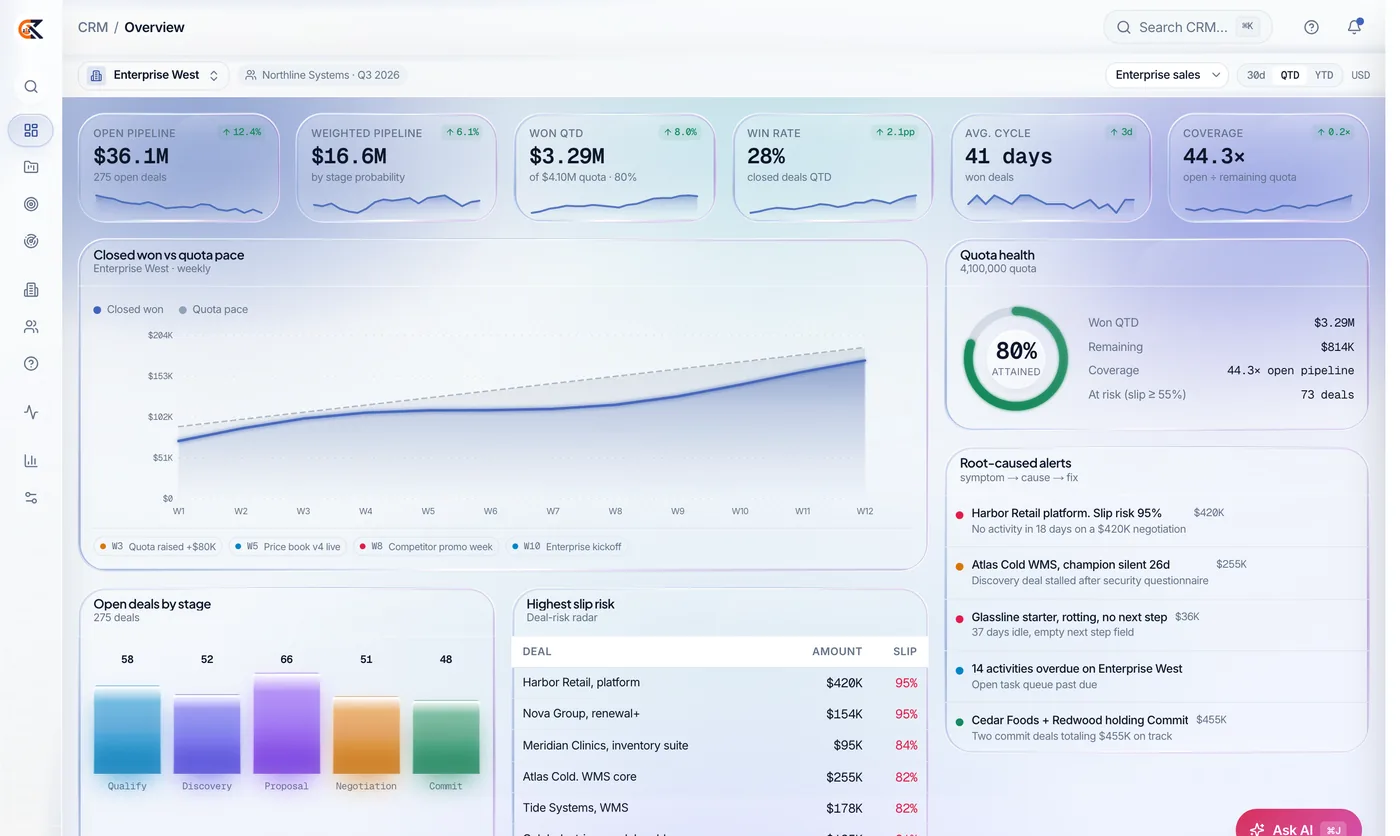
Revenue pilots: Marketing track and forecast quick reads, then CRM and pipeline product pages, then a Harbor or Northline-shaped scenario for narrative depth. Success metrics often include stage hygiene, forecast defendability, and handoff SLA between marketing and sales.
Service pilots: Operations track, Desk and Field live apps, Support model pages, Atlas-shaped narrative for field-heavy orgs. Success metrics often include time-to-first-response with context, job bounce rate, and SLA breach visibility before the customer calls again.
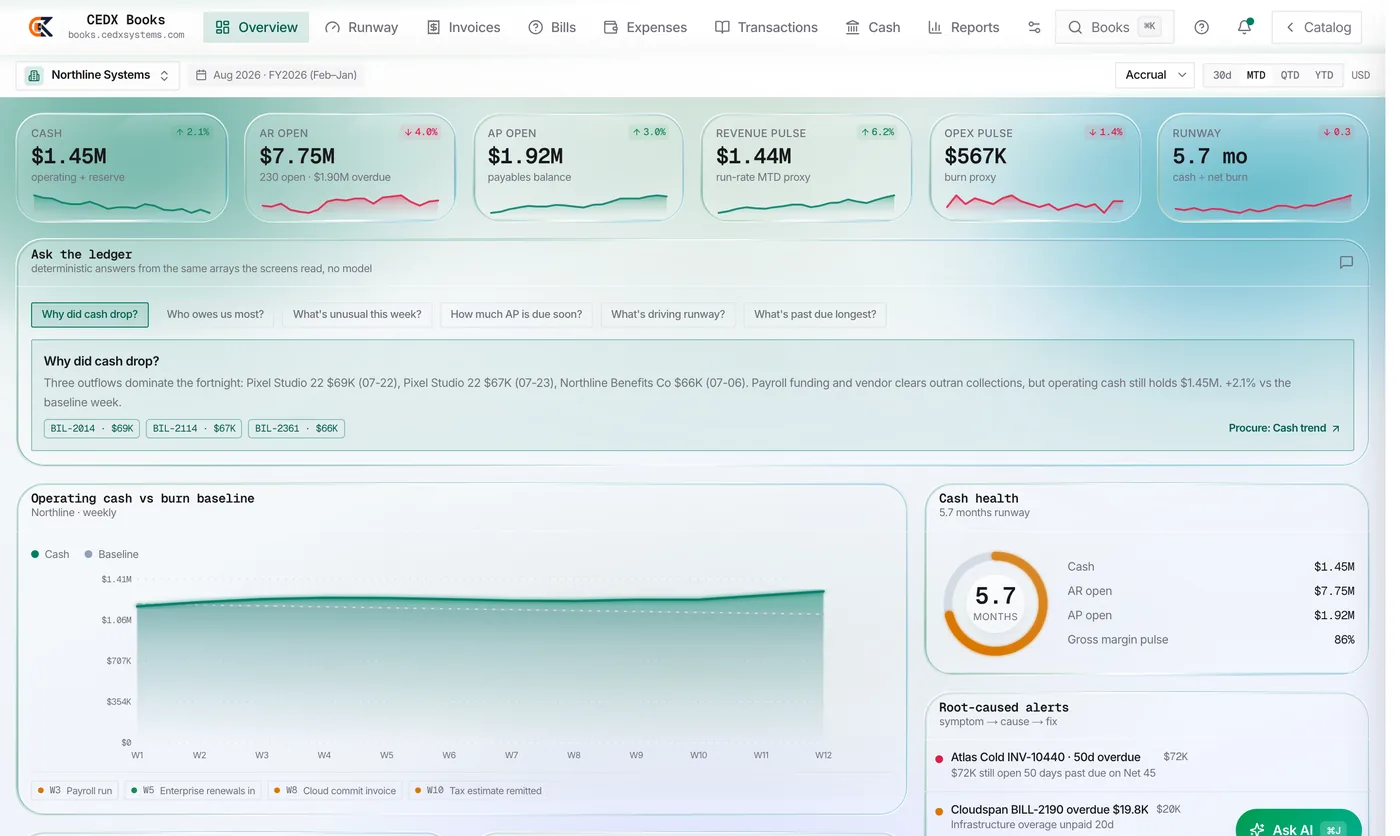
Finance pilots: Accounting track, Books and Revenue live apps, Meridian-shaped multi-entity narrative. Success metrics often include close duration for a standard entity set, reconciliation exceptions, and single export for the board pack.
Commerce pilots: Ecommerce track, Catalog Orders Checkout, Keystone-shaped marketplace narrative when multi-seller is in scope. Success metrics often include promise accuracy, returns path completeness, and shared order state across support and ops.
People pilots: People-ops track with People, recruiting, leave, and performance products when HR trust is the blocker. Success metrics often include time-to-offer with scorecards, leave balance disputes, and week-one access readiness.
For partners using Academy
Public basics, private labs
Public tracks are free for partner practitioners and should be completed before customer demos on that motion. Demo certification labs after approval test whether practitioners can run the live motion, not whether they can recite slides.
Do not resell Academy as your courseware; facilitate with attribution and add your industry SOW depth as the partner layer. Customers can tell when a partner merely renames vendor content.
Partner success can help map Academy sequences into a customer pilot plan when the deal is registered and multi-product complexity is real. That help is enablement, not free delivery staffing.
Track completion notes and lab attendance become progression evidence at Advanced and Premier reviews. Keep records; memory is not evidence.
When Academy and a customer scenario disagree in emphasis, use both: Academy for work design, scenario for industry-shaped storytelling with product embeds. Neither replaces the live product test on one user across three apps.
Measuring Academy impact
Did the curriculum change the pilot
Before and after a pilot kickoff workshop, check whether the team has three metrics, a retire list, and named owners. If not, the workshop failed regardless of how much content was covered.
During hypercare, check whether operators still use the live system on Friday without rebuilding a spreadsheet side channel. Spreadsheet return is a curriculum and governance failure as much as a product failure.
After wave one, capture which modules should be required for wave two audiences who did not attend the first workshop. Knowledge concentration in a project team is how BAU collapses.
Partner firms should track which practitioners completed which tracks before they are staffed on customer work. Unprepared staffing is how delivery quality fails Friday and shows up in tier review.
CEDX will keep Academy sparse and useful rather than flooding it with calendar filler; request topics when operator demand is clear. Quality over volume is the same editorial contract as the blog.
Business accounting
Learn the work, then open the product
Academy is not a replacement for the live app. It is how you design the queue so the app has somewhere real to land.
Who this track is for
Roles that get value
Ops / RevOps
Design queues and pilot metrics before config.
Finance leads
Close and rev-rec with shared customer truth.
Service managers
Desk and field motions without paper jobs.
Partners
Basics public; labs after program approval.
With live software
Pair modules with product pages
After each module, open the matching CEDX app and capture decisions in your pilot doc.
FAQ
This track
Is there a certificate?
Not for public tracks. Partner certifications are separate and practical.
Can we print modules?
Yes for internal training with attribution.
Who do I ask for facilitation?
Customers: talk to sales. Partners: partner success after approval.
Do modules require a CEDX tenant?
Reading does not. Live product steps need trial, customer, or partner demo access.
How does this relate to customer scenarios?
Scenarios show full-depth rollouts. Tracks teach the work design those rollouts depend on.
Want this facilitated?
Partners and CEDX can run the track as a workshop.