Referral offers are structured (advocate, friend, window) and tested like paid media. Five channels including offline name-share are tracked to purchase, and fraud is held at risk 55% before any reward pays out.
Eleven referrals sharing one advocate's domain is not advocacy. The hold queue catches it at 98% risk, before the $50 leaves, not after.
referrals.cedxsystems.com: live build
Runs on demo data. The program, people and figures are the demo's.
320 referrals this quarter54 converted · 16.9% of started
$878K attributed revenueagainst a $2.20M program target
22 fraud holds in queuerisk ≥ 55%, held before payout
What it is
Three things a referral program has to get right.
Offers with structure, not coupon sprawl
18 campaigns, each with advocate reward, friend reward and window: give $50, get $50 over 30 days; double credit at $100 for the advocate; a partner intro at $250 cash on close over 90 days. Each campaign reports referrals, conversions and revenue. The give-and-get leads at $820K.
Advocate + friend + window, per offer
Revenue per campaign, $820K at the top
Status: active, paused, draft, ended
referrals screen-2
Reward type is an experiment, not a debate
14 offer A/B tests pit cash against gift card against coupon against credit. The rules are printed on the screen: confidence grows with referrals per arm, and a winner locks only at 90% confidence with at least 100 referrals per arm. No peeking.
14 experiments · 6 running · 8 decided
Winner locks at ≥90% confidence, ≥100 per arm
Pre-launch estimator with historical bands
referrals screen-3
Fraud is held before it costs you
22 holds sit in queue at risk 55% or higher. The root-caused alerts name the patterns: a self-referral cluster on the give-and-get offer (11 held referrals sharing an advocate domain) and a code-leak velocity spike with public-list hits.
High-risk ledger with scores and amounts
Self-referral and code-leak alerts
Reward liability tracked at $14K
referrals overview
Product tour
Four screens, captured from the running build.
Not a mockup and not a concept deck. This is what opens at /app/referrals.
referrals.cedxsystems.com
01 Overview
The program brief, liability included
The health ring reads 40% of the $2.20M target, and the alerts keep the program honest: reward liability is climbing against conversion at $14K across 109 open rewards; five advocates drive a disproportionate share of the $898K attributed.
Started vs converted, weekly
Top-advocate concentration flagged
By-status funnel: invited to rejected
02 Campaigns
Every offer, accounted
The table runs from the $820K give-and-get to a pilot draft at zero. Paused campaigns keep their counters visible, so history does not vanish when an offer does.
875 referrals across 18 campaigns
$3.85M attributed by campaign
Average convert 27.4%
03 Experiments
Honest bands, locked winners
Cash $183 versus gift card $194 runs at 75% confidence; eight decided tests show their winners stamped. The estimator prices a new reward type against the historical band before a single referral is spent on it.
Uplift and confidence per arm pair
Winner A and Winner B filters
Estimated next uplift +1.5%
04 Channels
Five ways in, measured alike
3,202 shares became 1,692 clicks became 178 purchases. Per 100 shares: email returns 8.1 purchases, name-share 5.9, social 5.0, link 4.8, QR 2.3. The offline channel (256 mentions, 15 purchases, $121K) is measured because it is a channel, not a shrug.
Share → click 53% · click → purchase 11%
Efficiency ranked per 100 shares
Name-share: low volume, highest purchase rate
Who runs it
Three roles keep the program honest.
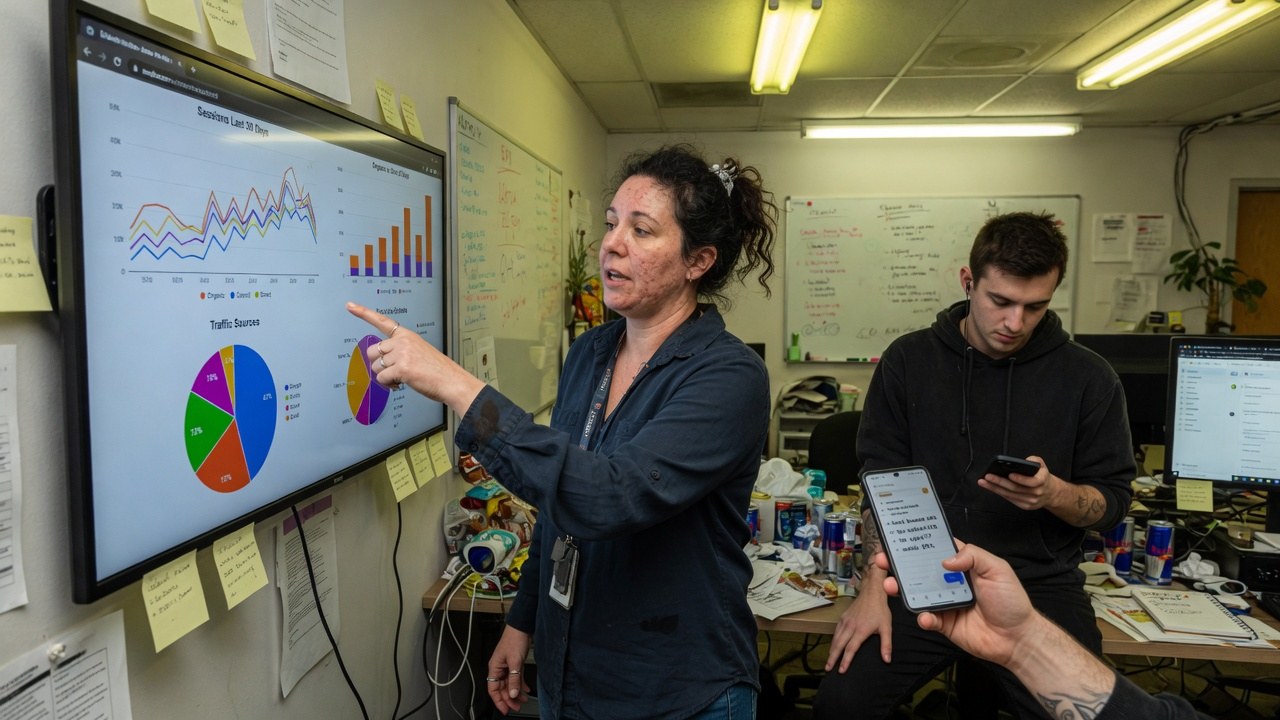
Roles, not references. We have no named customers yet, so nobody in these photographs is quoted, credited or claimed as one.
Program owner
Owns the offers and the target: 40% of $2.20M is the number they report.
18 campaigns · $878K
Analyst
Runs the experiments and defends the bands: a winner exists only at 90% confidence with 100 referrals a side.
14 tests · 8 decided
Risk reviewer
Works the hold queue before payout: the 22 holds are a review list, not an accusation.
holds · 22 at ≥55% risk
The shape of it
What the demo program actually looks like.
Every figure below is legible in the captures above. Nothing here is a projection of your estate. It is the state of the demo data.
320referrals QTD54 converted · 16.9%
$878Kattributed revenue40% of the $2.20M target
$14Kreward liability open109 rewards pending, held or approved
3,202shares tracked1,692 clicks · 178 purchases
Channel efficiency, purchases per 100 sharesranked · 3,202 shares in view
Email: 303 shares, $465 per share8.1
Name-share: 256 shares, $474 per share5.9
Social: 640 shares, $394 per share5.0
Link: 1,281 shares, $312 per share4.8
QR: 722 shares, $202 per share2.3
Program progress$878K of the $2.20M target
40%
Attributed · $878K
Remaining to target · $1.32M
Fraud holds22 of 320 referrals at risk ≥ 55%
Held for review · 22
Clear · 298
How it runs
A referral's life, in the order it actually happens.
01
Offer
Advocate reward, friend reward and window are set as a structure, not a coupon blasted to a list.
02
Share
Five channels carry the offer: link, email, social, QR and offline name-share, each measured to purchase.
03
Test
Reward types run as experiments with honest bands; winners lock at 90% confidence and 100 per arm.
04
Hold
Risk scoring runs before payout; holds are a review state, and liability is tracked openly at $14K.
One record
Referrals reads the record the estate already keeps.
Advocates are customers the estate already knows, so attribution, journeys and revenue all read the same people.
Yes. Every screenshot is a capture of the running build and you can open the same build at /app/referrals. It runs on demo data. The advocates and figures are the demo program’s.
How does fraud holding work?
Every referral is risk-scored. At 55% or higher the reward is held for review before payout: 22 are in queue in the demo, with the score and amount on the row. A hold is a review state, not an accusation.
What is name-share?
The offline channel: tell them I sent you, captured at the register, in chat or on calls. Low click volume, the highest purchase rate in the mix: 15 purchases from 256 mentions in the demo, worth $121K.
When does an experiment pick a winner?
When the rules say it may: 90% confidence with at least 100 referrals per arm, printed on the screen. Until then the test keeps running, and the bands stay honest.
Is Referrals audited or certified?
No certification has been issued. What we can evidence about hosting, encryption, tenant isolation and production access is written up on the security page.
The program is running. Go and look at it.
Live build, demo data, no card. Then ask what your name-share channel would be worth.