Ask AI, ⌘J, sits on every screen of every CEDX app. This is the console behind it: prompts versioned like code, every run traced, answers scored against eval gates, and spend watched against a budget.
Every answer in these captures ends the same way: “Cite handbook §Billing/double-charge.” An assistant that shows its sources is one you can check. That is the whole design.
copilot.cedxsystems.com: live build
Runs on demo data. The budget card says “illustrative” on the screen itself.
84 prompts in the registryversioned, scored and priced per run
320 traced runstokens, cost and latency on every one
Ask AI · ⌘Jthe same button on every screen, in every app
What it is
Three things an in-app assistant has to get right.
Ask, and the answer cites its source
The Playground's system prompt is on screen: “Answer only from retrieved context. Cite sources.” The demo transcript does exactly that, finding order NL-48291, naming invoices INV-9912 and INV-9913, applying refund policy §4.2 and ending by citing the handbook section it relied on.
System prompt and template visible next to the answer
Token, cost and latency estimate before you run
Single or Compare, side by side
copilot screen-2
84 prompts, versioned like code
The registry carries VER, project, model, runs, score and cost per run on every row: docs.rag.answer is on 4.0.0 with 22,110 runs at $0.0142 each. Tag chips filter the list by what you are actually tuning: grounded, latency, policy, cost.
Version, project and model on every row
Score and cost per run, sortable
Filter chips by tag: grounded, latency, policy
copilot screen-3
Every run leaves a trace
320 runs with run id, prompt, model, status, latency, in and out tokens, cost and score. The failures are as legible as the successes: Error rows sit at 30.0s with zero output tokens, a timeout, not a mystery.
ok · error · timeout · filtered as chips
In/out tokens and cost on every row
Search by prompt, run id or model
copilot screen-4
Product tour
Four screens, captured from the running build.
Not a mockup and not a concept deck. This is what opens at /app/copilot.
copilot.cedxsystems.com
01 Overview
The AI period brief, not a vanity dashboard
Docs RAG citation quality slipped after the Jul 30 traffic spike: citation F1 fell to 0.79 against the 0.82 gate. Reasoning-model spend is up 38% week over week. Each alert arrives root-caused and priced: symptom, cause, fix, and the dollar figure next to it.
Runs, spend, score, latency, error rate on one row
Alerts arrive root-caused and priced
Budget pace marked illustrative, from the 320-run sample
02 Playground
Try the prompt before it ships
Template support.triage.v3 on assist-balanced, temperature 0.2, with the transcript labelled “demo transcript · no live assistant call” on the screen itself. The template score of 86 comes from 18,420 historical runs, and the screen says so.
demo transcript · no live assistant call, on screen
Temperature as a slider, model from the model card
Template score 86 from 18,420 historical runs
03 Prompts
A registry, not a folder of text files
84 prompts, 501,801 historical runs, 6 models in use, an average score of 77 across the view. Every row names its version, project, model, run count, score and cost per run, and exports to CSV.
501,801 historical runs behind the scores
6 models in use, from assist-mini to vision-edge
CSV of the view you were actually looking at
04 Traces
Debug the run, not the vibe
320 traces with status, latency, in and out tokens, cost and score per run. The most expensive run in view, sales.rag.hotfix at $19.48, sits next to a 91 score, so cost and quality are argued about from the same table.
Errors at 30.0s with zero output tokens
Cost per run from $0.0648 to $19.48 in view
Score on every row, not on a separate report
Who runs it
Three roles keep the assistant honest.
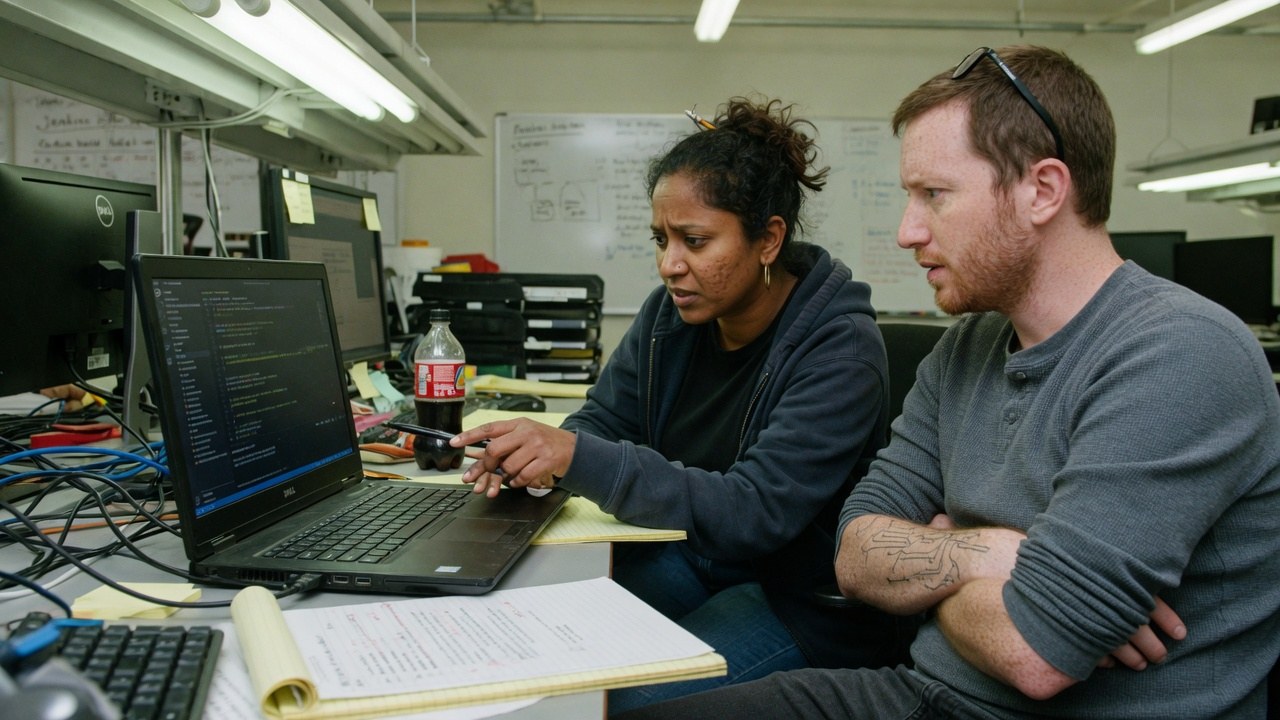
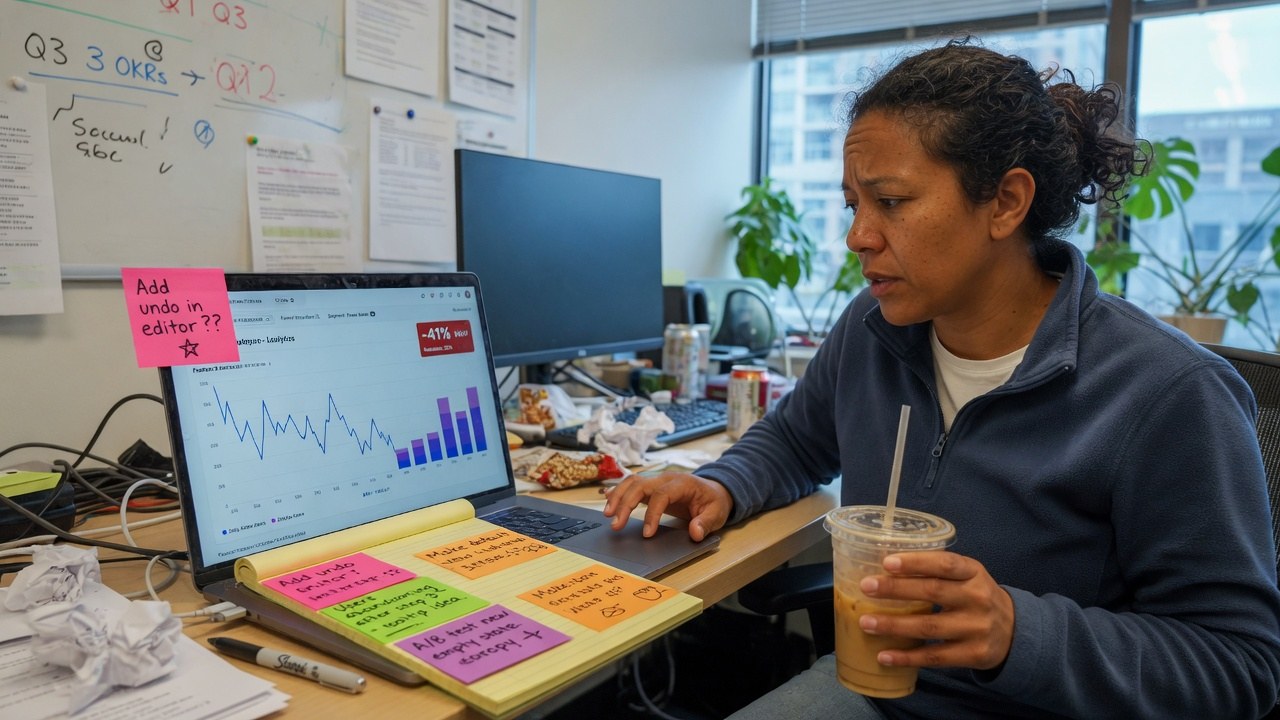
Roles, not references. We have no named customers yet, so nobody in these photographs is quoted, credited or claimed as one.
Prompt engineering
Owns the registry: versions prompts, watches score and cost per run, and promotes 4.0.0 over 3.0.8 only when the evals say so.
84 prompts · 6 models
Knowledge and docs
Keeps the handbook the assistant is allowed to cite. Retrieval quality is their scoreboard: citation F1 against the 0.82 gate.
citation F1 · gate 0.82
Support operations
Reads the traces when an answer goes wrong, and works the review queue before a template ships to production.
review queue · 23
The shape of it
What the demo workspace actually looks like.
Every figure below is legible in the captures above. Nothing here is a projection of your estate. It is the state of the demo data.
320traced runs in view278 ok · 13.1% non-ok
84prompts in the registry501,801 historical runs
$0.003per run, best on the frontiersupport.refund.policy · score 91
3.2saverage latencyslowest ok run 9.1s
Root-caused alerts, priced on screensymptom → cause → fix · last 30 days
Docs RAG citation F1 failed: 0.79 against the 0.82 gate, after the Jul 30 traffic spike$590
Reasoning-model spend +38% week over week: code.review.diff volume with no cheap path for small diffs$184
support.refund.policy reaches the Pareto front: 91 score at $0.003/run on assist-fast$19
Runs by status278 ok of 320 in view
Ok · 278 runs
Non-ok · 42 runs: the 13.1% on the error-rate card
Pace 55%: “illustrative from the demo sample”, on the screen
How it runs
A prompt's life, in the order it actually happens.
01
Draft
A prompt starts in the Playground: template, model and temperature set before the first run, with the cost estimate on screen.
02
Score
Evals gate the answer. Citation F1 at 0.79 failed against the 0.82 gate, and the alert arrived root-caused rather than as a dip in a chart.
03
Trace
Every run lands in Traces with tokens, cost and latency, so a bad answer in production has a paper trail back to the exact run.
04
Promote
Versions move through the registry: docs.rag.answer is on 4.0.0, with runs, score and cost per run following the version, not the file.
One record
The assistant reads the record the estate already keeps.
Copilot is not a chatbot with a connector bolted on. Its system prompt says “answer only from retrieved context”, and that context is what the rest of the estate writes.
Finding this out on the third call is worse for you than reading it here, and worse for us.
Copilot is not generally available. What opens today is the live build running on demo data: the Playground says “demo transcript · no live assistant call” on the screen itself.
We have no named customers to show you, so this page shows none. Northline in the captures is the software's demo workspace, not a reference.
The assistant answers only from retrieved context by design. It is not a general web chatbot, and we do not claim breadth beyond the content your estate holds.
The budget figures, $42K a month, 55% pace, are labelled “illustrative from the demo sample” on the screen. They are not billing data, yours or ours.
The model lineup in the captures (assist-mini through assist-reasoning and vision-edge) is the demo configuration. Which models a given plan can use is not something we are claiming here.
No audit or compliance certification has been issued for Copilot. What we can evidence about hosting, encryption and access is on the security page.
Yes. Every screenshot is a capture of the running build and you can open the same build at /app/copilot. It runs on demo data, which the Playground states on screen rather than in a disclaimer.
Where do the assistant's answers come from?
From retrieved context, and only from retrieved context. That restriction is the system prompt, visible in the Playground capture. The demo answer ends by citing the handbook section it used, §Billing/double-charge, so a person can check it.
What stops a prompt quietly getting worse?
The eval gates. When citation F1 fell to 0.79 against the 0.82 gate after a traffic spike, the Overview raised a root-caused alert naming the prompt, the model and the question type it concentrated in, not just a downward line.
What does a run cost?
The registry prints cost per run on every prompt, from $0.0012 on assist-mini to $4.22 on assist-large in the current view, and every trace carries its own cost. The budget card is labelled illustrative; nothing on this page is a price list.
Can we see why a specific answer went wrong?
Yes, at the run level. Traces holds each run's status, latency, in and out tokens, cost and score; the error rows sit at 30.0 seconds with zero output tokens, which is a timeout you can act on rather than a complaint you cannot.
Is Copilot audited or certified?
No certification has been issued. What we can evidence about hosting, encryption, tenant isolation and production access is written up on the security page.
The console is running. Go and look at it.
Live build, demo data, no card. Then ask it the question your support team got this morning.