CEDX AI Gateway sits between your apps and the models: a virtual key per team, routes with primaries and counted fallbacks, caching, rate limits, and a ledger that writes latency, tokens and cost on every single request.
The most expensive request in the demo window cost $30.25: route.support.chat.27 on assist-large, 8.5K tokens in. The cheapest visible cost is $0.0000. Both are rows in the same table, which is the entire point of a gateway.
ai-gateway.cedxsystems.com: live build
Runs on demo data. Northline is the software's demo workspace, not a customer.
48 virtual keysone per team or workload · 9 flagged critical risk
36 routes · 702,971 hitsfallbacks counted on every row, not hidden
13.2% cache hitthe Jul 21 TTL change is annotated on the chart
What it is
A gateway earns its keep in three places.
A ledger of every request
340 requests in the sample, each with route, key, model, status, latency, tokens in and cost. route.support.rank.22 answered in 16ms for $0.0000 on assist-fast; route.support.chat.27 took 2.8 seconds and $30.25 on assist-large. Same table, same columns: no arguing about where the money went.
Status chips: ok · error · 429 · timeout · cached
Search by route, request id, key or model
CSV of the filtered view
ai-gateway screen-2
Routes carry primaries and fallbacks
36 routes, each naming a team, a primary model and a fallback count. route.support.v3 runs assist-balanced with 2 fallbacks over 48,200 hits; route.onboard.batch.34 shows 14.4% of its traffic falling back and is flagged Error, which is exactly when you want a gateway and not a wrapper.
FB count and FB% printed on every route
702,971 hits and $40K spend over 30 days
10 routes flagged degraded, needing attention
ai-gateway screen-4
Spend, attributed to the model
The usage grid keeps 180 day-key rows, 176,843 requests and $95K of usage-grid spend, and the sample's spend share is blunt: assist-reasoning takes 52% ($788.21), assist-large 29%. The two cheapest model families share 3% between them.
Spend share by model, from the request sample
Day-by-key rows with tokens and 429 counts
Filter chips per model family: fast to edge
ai-gateway screen-3
Product tour
Four screens, captured from the running build.
Not a mockup and not a concept deck. This is what opens at /app/ai-gateway.
ai-gateway.cedxsystems.com
01 Overview
Health is a number, not a colour
340 sampled requests: 265 ok, 45 cached, 27 rate-limited, 2 error, 1 timeout. The health ring reads 0.9% errors and 7.9% 429s; 9 of 48 virtual keys carry critical risk. The alerts arrive with the fix attached: vk-code-review at 94% of its RPM soft-cap; raise the cap to 300 or route the canary off peak.
429 rate is a headline card at 7.9%
Cache TTL 5m→30m on Jul 21, annotated on the chart
Budget pace 100% on the health panel
02 Requests
Every call, itemised
The request ledger is the ground truth: req id, route, virtual key, model, status, latency, tokens in and cost, with a Sessions tab beside it. The $30.25 request and the $0.0000 request are twenty rows apart.
340 requests in the sample window
Latency from 16ms to 6.3s in view
Cost from $0.0000 to $30.25 in view
03 Usage & cost
The bill, explained to itself
Spend and cache analytics on one screen: $1.5K of sample request spend against a $95K usage grid, 1282K tokens in and out, and a spend-share panel that puts 52% of the money on assist-reasoning. The day-key table rolls it up with 429s counted per row.
180 day-key rows behind the usage grid
vk-code-review: 3,113 requests, $7.5K, 5 rate-limits on Aug 2
Spend share by model family, filterable
04 Routes
Where resilience is configured
Thirty-six routes with team, primary model, fallback count, hits, fallback share, error share, latency and spend. route.batch.jobs carries 62,000 hits on assist-fast at a 6.8% error share: Warning, visible, and nobody had to grep a log to find it.
36 routes · 702,971 hits · $40K over 30 days
Fallback share up to 15.6% in view
healthy · degraded · paused filter chips
Who runs it
Three roles keep the front door honest.
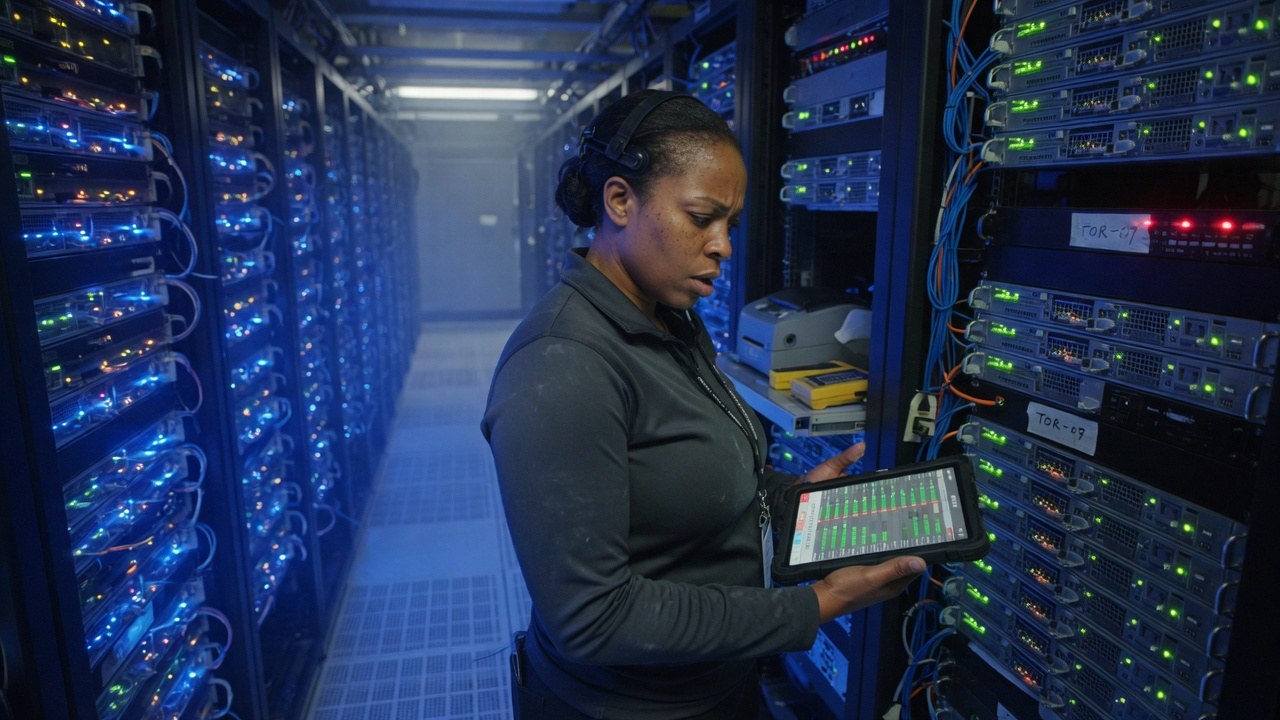
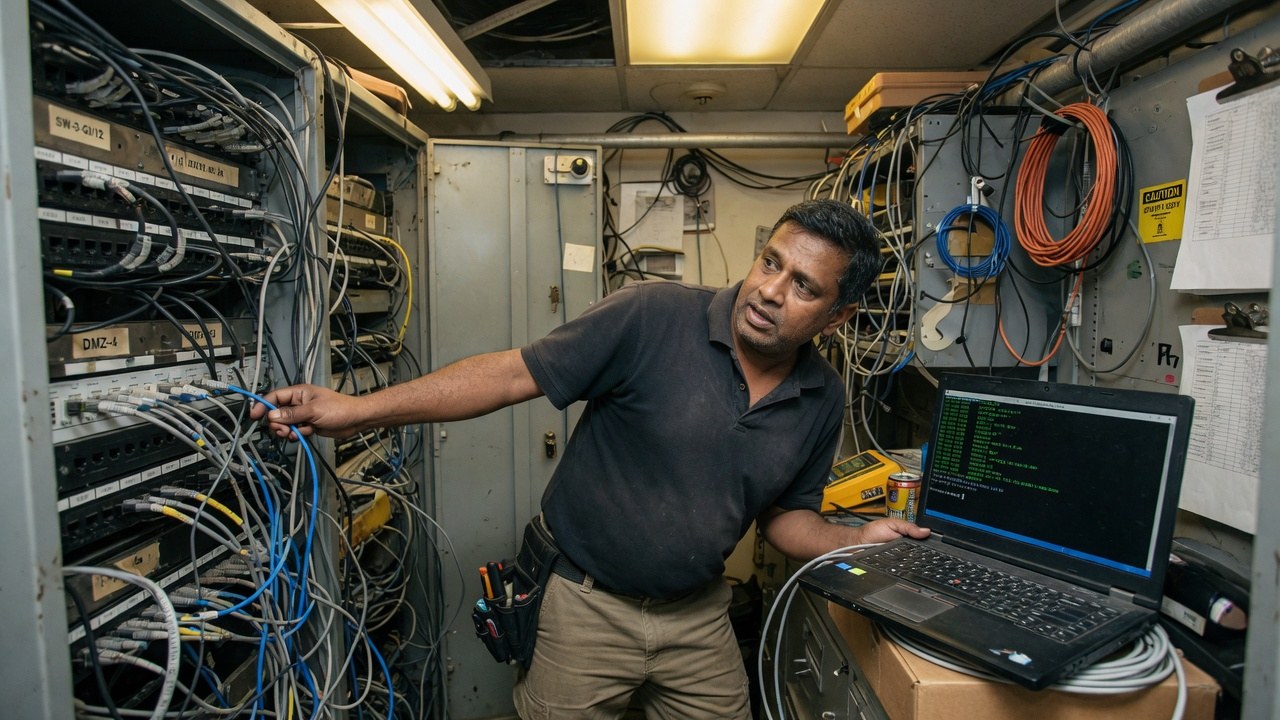
Roles, not references. We have no named customers yet, so nobody in these photographs is quoted, credited or claimed as one.
Platform engineering
Owns routes and providers: sets primaries and fallbacks, watches fallback share, and answers for the 10 routes flagged degraded.
36 routes · 10 degraded
Cost and usage review
Reads the day-key grid the way finance reads a ledger. 52% of sample spend on one model is a conversation started early, not a surprise at month end.
$95K · 180 day-key rows
Incident response
Gets the alert when vk-code-review hits 94% of its RPM soft-cap, and chooses between raising the cap and routing the canary off peak.
429 rate · 7.9%
The shape of it
What the demo workspace actually looks like.
Every figure below is legible in the captures above. Nothing here is a projection of your estate. It is the state of the demo data.
340requests in the sample265 ok · 45 cached · 27 rate-limited
48virtual keys9 flagged critical risk
36routes in view702,971 hits · $40K over 30 days
52%of sample spend on one modelassist-reasoning · $788.21 of $1.5K
Spend share by model, from the request sample$1.5K sample · usage grid rolls up $95K
assist-reasoning: 52% of sample spend$788.21
assist-large: 29%, the draft-and-chat workhorse$437.19
Cache hit rateafter the Jul 21 TTL change: 5m → 30m
13.2%
Cache hit · 13.2% of the sample
Alert on screen: extend the pattern to support.tools
How it runs
A request's life, in the order it actually happens.
01
Key
Each team or workload gets a virtual key, 48 in the demo, so usage, limits and risk attach to something ownable.
02
Route
The request enters on a route with a primary model and counted fallbacks; route.support.v3 carries 2 over 48,200 hits.
03
Limit
Soft-caps and rate limits bite before budgets do: vk-code-review at 94% RPM raised an alert with two fixes attached.
04
Bill
Every request writes its tokens and cost to the ledger; the usage grid rolls it up by day and key, 429s included.
One record
The door every model call in the estate walks through.
The same model lineup, assist-mini through assist-reasoning, vision-edge, appears on every AI screen in the estate, because the calls share one ledger.
Finding this out on the third call is worse for you than reading it here, and worse for us.
AI Gateway is not generally available. What opens today is the live build running on demo data: Northline is the software's demo workspace, not a customer.
We have no named customers to show you, so this page shows none.
The routes in the captures carry the CEDX model lineup: assist-mini through assist-reasoning and vision-edge. Third-party model providers are not something we are claiming on this page.
The spend figures, $1.5K sample, $95K usage grid, $40K of route totals, are the demo workspace's numbers, shown so you can check the maths, not projections of yours.
Rate limits, soft-caps and fallbacks are visible working mechanisms in the demo; we are not quoting an uptime or latency SLA here.
No audit or compliance certification has been issued for AI Gateway. What we can evidence about hosting, encryption and access is on the security page.
Yes. Every screenshot is a capture of the running build and you can open the same build at /app/ai-gateway. It runs on demo data: Northline is the demo workspace, not a customer.
What happens when a model falls over?
The route falls back, and the fallback is counted. Routes carry a primary and an FB count: route.support.v3 fired its fallback in the demo window and the alert's advice was to keep the weights and watch provider health, not to panic. Fallback share is a column on every route, up to 15.6% in view.
How do costs stay sane?
Three ways, all on screen: every request writes its cost to the ledger; soft-caps alert before budgets blow, vk-code-review was caught at 94% of its RPM cap; and caching took 13.2% of the sample after the TTL change.
Can we cap one team without touching the others?
That is what virtual keys are for. Each of the 48 keys in the demo carries its own usage, limits and risk flag, 9 are flagged critical risk, and the usage grid breaks spend down by day and key.
Is AI Gateway audited or certified?
No certification has been issued. What we can evidence about hosting, encryption, tenant isolation and production access is written up on the security page.
The ledger is running. Go and read it.
Live build, demo data, no card. Then check what your most expensive request would have cost.